The modern workplace is changing rapidly. Businesses are no longer looking for office spaces that simply accommodate employees and daily operations. They want environments that support productivity, employee well-being, environmental responsibility, and long-term business growth. This shift has made sustainable office workspaces an important consideration for organisations planning their future.
A sustainable office is designed to use resources efficiently while creating a comfortable and productive working environment. From energy-efficient lighting to eco-friendly materials and smart space planning, every design decision can contribute to a greener workplace.
For businesses planning to upgrade their existing offices, a well-planned office renovation commercial project can provide an opportunity to introduce sustainable solutions without compromising functionality or aesthetics.
What Makes an Office Workspace Sustainable?
A sustainable office workspace focuses on reducing environmental impact while improving the everyday experience of employees. It combines practical design, energy efficiency, responsible material selection, and effective space utilisation.
Instead of focusing only on appearance, businesses should consider how their office environment performs over time.
Some important elements of sustainable office design include:
- Energy-efficient lighting and electrical systems.
- Natural ventilation and improved indoor air quality.
- Eco-friendly and recyclable construction materials.
- Water-saving fixtures and responsible resource management.
- Flexible furniture and adaptable work areas.
- Smart technology for managing energy consumption.
These features help create work environments that are both environmentally responsible and suitable for modern business requirements.
Why Are Sustainable Office Workspaces Important for Businesses?
Sustainability is becoming an important part of business planning. Companies are increasingly recognising that workplace design can influence operational costs, employee satisfaction, and their overall environmental impact.
1. Reduced Energy Consumption
Energy consumption is one of the major operating expenses in commercial buildings. Traditional lighting, inefficient air conditioning, and outdated electrical systems can increase monthly energy bills.
Sustainable office design helps businesses manage these expenses through LED lighting, energy-efficient HVAC systems, occupancy sensors, and smart temperature controls.
Making these improvements can reduce unnecessary energy usage while maintaining a comfortable working environment.
2. Improved Employee Productivity
Employees perform better when they work in comfortable and well-organised surroundings. Natural lighting, proper ventilation, ergonomic furniture, and reduced noise levels can contribute to a healthier workplace.
Modern office workspaces should balance collaborative areas with quiet zones where employees can concentrate on individual tasks.
A thoughtfully designed environment can also improve employee satisfaction and create a more positive workplace experience.
3. Better Space Utilisation
Businesses often need to accommodate changing team sizes, new departments, and different working arrangements. An office with an inefficient layout may waste valuable floor space.
Flexible workstations, shared meeting rooms, modular furniture, and multifunctional areas allow companies to make better use of available space.
This approach is particularly useful for growing organisations that want to expand their operations without constantly increasing their office footprint.
Sustainable Design Trends Transforming Modern Office Workspaces
Workplace design continues to evolve as businesses adopt new technologies and environmentally responsible practices. Several design trends are influencing how modern commercial offices are planned.
Biophilic Office Design
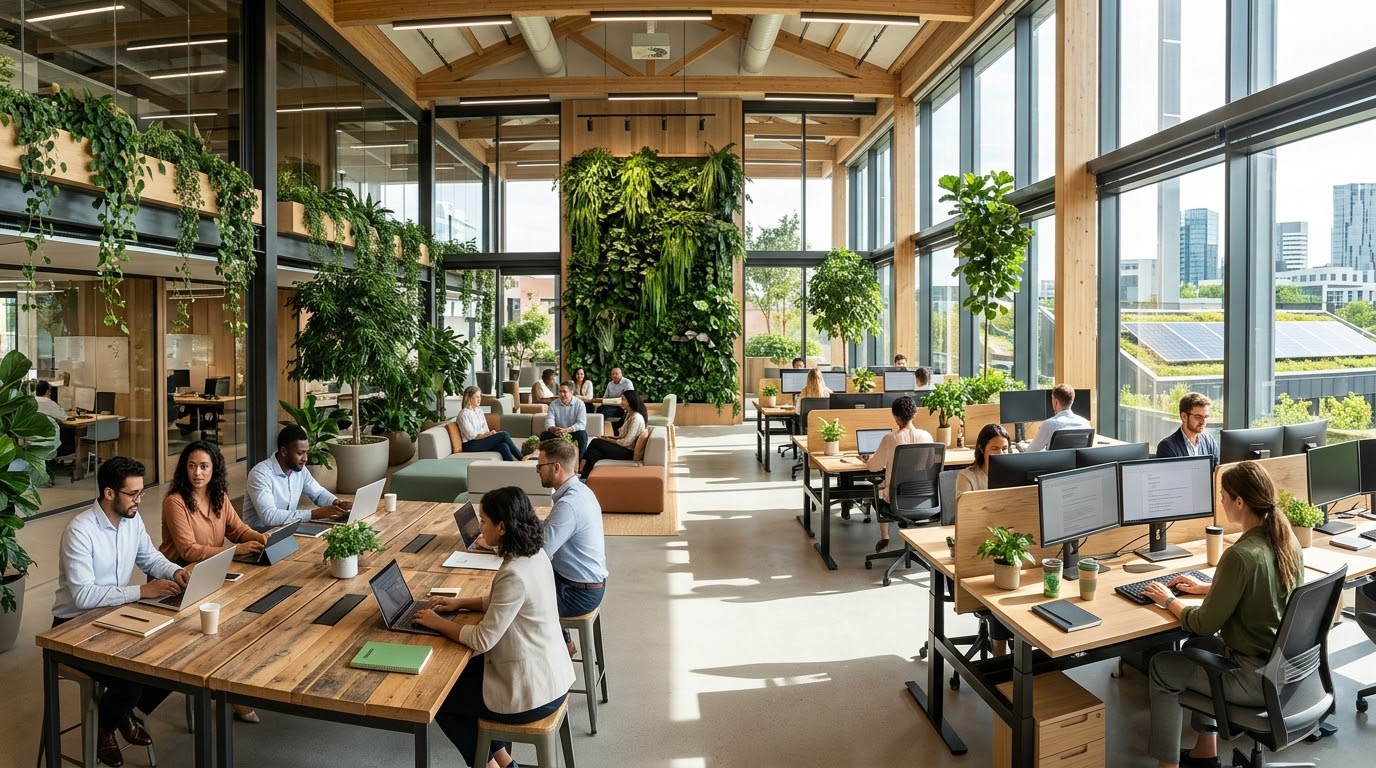
Biophilic design brings natural elements into the workplace. Indoor plants, natural textures, wooden finishes, and outdoor views help create a more welcoming atmosphere.
Adding greenery and maximising natural daylight can make office environments feel more comfortable and visually appealing.
Businesses can introduce this approach through indoor gardens, green walls, natural materials, and well-positioned windows.
Energy-Efficient Lighting
Lighting plays an important role in workplace comfort and energy management. LED lighting systems consume less electricity than many traditional lighting options and generally require less frequent replacement.
Combining LED fixtures with natural daylight and automated lighting controls can help businesses avoid unnecessary electricity consumption.
Flexible and Modular Furniture
Fixed furniture arrangements may not support changing business requirements. Modular desks, movable partitions, and adaptable meeting areas make it easier to reorganise office layouts.
These solutions also help businesses reduce unnecessary furniture replacement during future renovations.
Eco-Friendly Building Materials
Material selection is another important part of sustainable commercial interiors. Businesses can consider recycled materials, responsibly sourced wood, low-VOC paints, and durable flooring options.
Choosing long-lasting materials can reduce maintenance requirements and minimise waste over time.
How Office Renovation Commercial Projects Support Sustainability
Renovating an existing office is an effective opportunity to improve its environmental performance. Rather than completely rebuilding a workspace, businesses can upgrade important elements of the existing interior.
A planned office renovation commercial project should begin with an assessment of the current space, its energy usage, employee requirements, and future business goals.
The renovation process can focus on several important improvements.
Optimising the Existing Layout
Reviewing the current floor plan helps identify unused spaces, overcrowded workstations, and inefficient circulation areas. A better layout can improve movement, collaboration, and space utilisation.
Upgrading Electrical and Lighting Systems
Replacing outdated lighting with energy-efficient alternatives and introducing smart controls can improve the overall efficiency of the office.
Improving Ventilation and Indoor Comfort
Proper ventilation, suitable air conditioning systems, and healthier interior finishes contribute to a more comfortable workplace.
Selecting Sustainable Interior Finishes
Using durable flooring, low-emission paints, and responsibly sourced materials helps create interiors that are practical and environmentally conscious.
Creating Adaptable Work Areas
Flexible meeting rooms, collaborative spaces, and multifunctional zones allow businesses to adjust their workplaces as operational needs change.
A successful renovation should consider both immediate improvements and long-term maintenance requirements.
Practical Ways to Create an Eco-Friendly Office Environment
Businesses do not always need a complete renovation to make their workplaces more sustainable. Small improvements, when implemented consistently, can also make a meaningful difference.
Consider these practical approaches:
- Replace traditional bulbs with energy-efficient LED lighting.
- Introduce indoor plants to improve the natural appearance of work areas.
- Use reusable office supplies instead of disposable alternatives.
- Encourage digital documentation to reduce paper consumption.
- Install water-efficient bathroom and pantry fixtures.
- Choose ergonomic furniture made with durable materials.
- Establish waste segregation and recycling practices.
Combining these practices with thoughtful interior planning can help businesses develop a more responsible workplace culture.
Common Mistakes to Avoid When Planning Sustainable Office Interiors
Although sustainable office design offers several advantages, poor planning can reduce its effectiveness.
One common mistake is prioritising appearance over functionality. An attractive office may not necessarily provide sufficient lighting, ventilation, or comfortable workstations.
Another issue is selecting materials based only on their initial purchase price. Lower-quality products may require frequent repairs or replacements, increasing long-term expenses.
Businesses should also avoid overlooking employee requirements. A sustainable workspace must support different working styles, including focused tasks, meetings, and collaborative activities.
Before starting an office upgrade, organisations should evaluate their space requirements, energy usage, maintenance needs, and future expansion plans.
The Future of Sustainable Office Workspaces
The future of office design will increasingly focus on flexibility, technology, employee well-being, and environmental responsibility.
Smart building systems will help businesses monitor lighting, temperature, and energy consumption. Flexible layouts will support hybrid working arrangements, while sustainable materials will become an important consideration in commercial interior planning.
Businesses that invest in future-ready office workspaces can create environments that adapt to changing workplace expectations.
Sustainability should not be treated as a temporary design trend. It should be an important part of long-term workplace planning and business development.
Conclusion
Sustainable office workspaces are becoming essential for businesses that want to create productive, comfortable, and environmentally responsible workplaces. From energy-efficient lighting and eco-friendly materials to flexible layouts and improved indoor comfort, every design decision can contribute to a better working environment.
For organisations planning to upgrade their existing interiors, a carefully executed office renovation commercial project can help transform outdated spaces into modern and efficient workplaces.
By combining sustainable design principles with practical space planning, businesses can build office environments that support employees, reduce unnecessary resource consumption, and remain adaptable for the future.