
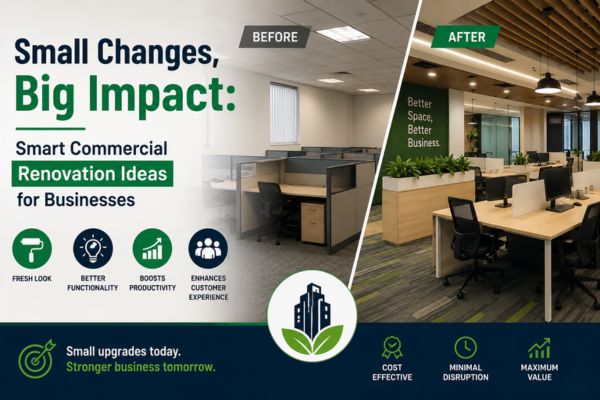
A commercial space does more than provide a place to work. It influences employee productivity, customer experience, brand perception, and the overall efficiency of daily operations. However, improving a business environment does not always require a complete renovation or a major structural transformation. In many cases, small and well-planned changes can create a significant impact.
Smart commercial renovation focuses on identifying the areas that need improvement and making practical upgrades that deliver long-term value. From improving lighting and updating layouts to refreshing interiors and creating flexible workspaces, businesses can transform their premises without unnecessary disruption. Professional facility management services chennai can also support the ongoing maintenance and efficient management of commercial spaces, helping businesses maintain a functional, organised, and professional environment.
Refresh the Entrance and Reception Area
The entrance is often the first part of a commercial property that visitors, clients, and customers experience. An outdated or poorly organised reception area can affect the first impression of a business.
Simple improvements such as repainting walls, updating signage, replacing worn flooring, improving lighting, or adding comfortable seating can make the area look more professional and welcoming. Businesses can also use this space to reflect their brand identity through colours, graphics, and interior elements.
A refreshed entrance can create a stronger visual impact without requiring extensive renovation work.
Improve Lighting for Better Function and Comfort
Lighting plays an important role in both appearance and functionality. Poor lighting can make a workspace feel dull, uncomfortable, or uninviting. On the other hand, well-planned lighting can improve visibility, create a more pleasant atmosphere, and highlight important areas within the property.
Businesses can consider replacing outdated fixtures with energy-efficient lighting, adding task lighting to work areas, and using accent lighting to highlight displays, reception spaces, or architectural features. Maximising natural light can also help create a brighter and more comfortable environment.
Small lighting upgrades can change the overall look and feel of a commercial space while potentially improving energy efficiency.
Create Flexible Workspaces
Modern businesses often require spaces that can adapt to different activities. A fixed layout may not always support changing team sizes, collaborative work, meetings, or individual tasks.
Commercial renovation can introduce flexibility through movable partitions, modular furniture, multi-purpose meeting areas, and adaptable workstations. Instead of redesigning the entire office, businesses can focus on underused areas and transform them into spaces that serve multiple purposes.
Flexible layouts can help businesses use available space more effectively and respond to future changes without frequent large-scale renovations.
Upgrade Flooring in High-Traffic Areas
Floors experience constant wear in commercial environments, especially in reception areas, corridors, retail spaces, and other high-traffic zones. Damaged or outdated flooring can make an otherwise well-maintained property appear neglected.
Replacing flooring in selected areas can provide an immediate visual improvement. Businesses can choose durable materials that are suitable for the level of foot traffic and easy to maintain. Updating only the most visible or heavily used areas can also be a practical alternative to replacing flooring throughout the entire property.
A carefully selected flooring upgrade can improve both appearance and functionality.
Make Better Use of Unused Space
Many commercial properties have areas that are not being used effectively. Empty corners, oversized storage areas, unused rooms, or awkward spaces can often be transformed into something more valuable.
For example, an unused room could become a meeting space, staff breakout area, quiet work zone, storage solution, or client consultation area. Small layout changes can help businesses maximise the potential of their existing premises instead of investing in additional space.
Before beginning a renovation, it is useful to assess how each area is currently being used and identify opportunities for improvement.
Update Walls Without Major Construction
Walls can have a significant influence on the appearance of a commercial property. Fortunately, updating them does not always involve extensive construction work.
A fresh coat of paint, feature walls, branded graphics, wall panels, or decorative finishes can give a space a completely different character. Neutral colours can create a clean and professional appearance, while carefully selected brand colours can add personality to customer-facing areas.
Wall improvements are often one of the most cost-effective commercial renovation ideas because they can deliver visible results with minimal disruption.
Improve Storage and Organisation
Clutter can make a commercial environment feel smaller, less organised, and less professional. Improving storage is a practical renovation strategy that can enhance both appearance and efficiency.
Built-in cabinets, wall-mounted storage, concealed shelving, and better-organised storage rooms can help businesses keep essential items accessible without overcrowding the workspace.
An organised environment can also improve workflow by reducing the time employees spend searching for equipment, documents, or supplies.
Upgrade Staff Break Areas
Employee comfort is an important consideration in commercial design. A small renovation of a break room or staff area can create a more enjoyable environment for employees to relax and recharge.
Simple changes such as better seating, improved lighting, updated kitchen facilities, additional storage, or a more attractive interior design can make a noticeable difference. Businesses do not necessarily need a large recreational area to improve employee comfort.
A functional and well-maintained staff space can contribute to a more positive workplace environment.
Focus on Energy-Efficient Improvements
Commercial renovation can also provide an opportunity to improve the efficiency of a building. Small upgrades may help reduce unnecessary energy consumption and improve the comfort of the space.
Energy-efficient lighting, improved insulation, modern window treatments, smart temperature controls, and upgraded equipment can be considered as part of a renovation plan. These improvements should be selected based on the specific needs and condition of the property.
Combining visual upgrades with practical efficiency improvements can help businesses create a space that looks better and functions more effectively.
Improve Customer-Facing Areas
For retail stores, clinics, restaurants, showrooms, and other customer-focused businesses, the appearance and layout of public areas can influence the overall customer experience.
Small improvements may include clearer signage, better seating arrangements, improved product displays, updated counters, enhanced lighting, or more organised waiting areas. The goal is to make the space easier to navigate, more comfortable, and visually appealing.
Even minor changes can help create a more professional environment and ensure that the physical space supports the way customers interact with the business.
Plan Renovations Around Business Operations
One of the most important aspects of commercial renovation is planning the work carefully. Businesses should consider how renovation activities may affect employees, customers, equipment, and daily operations.
Breaking the project into smaller stages can help reduce disruption. For example, businesses may renovate one area at a time or schedule certain work outside regular operating hours where practical.
A clear renovation plan should identify priorities, budgets, timelines, materials, and the expected outcome of each improvement. This approach can help businesses focus on changes that provide the greatest value.
Conclusion
A successful commercial renovation does not always require major demolition or a complete redesign. Small changes can make a meaningful difference when they are planned around the needs of the business, employees, and customers.
Refreshing the entrance, improving lighting, updating flooring, creating flexible work areas, maximising unused space, and improving organisation are all practical ways to enhance a commercial property. A well-planned office renovation commercial project can help businesses improve both the functionality and appearance of their workspace while supporting a more productive environment.
By taking a smart and strategic approach, businesses can create a more modern, efficient, and welcoming commercial environment. Sometimes, small changes really can create a big impact.