How Lighting Design Influences Modern Office Interiors

How Lighting Design Influences Modern Office Interiors

Lighting is one of the most important elements in a modern office interior. It does more than simply make a workspace visible. Well-planned lighting can influence productivity, comfort, concentration, workplace atmosphere, and even the way employees experience the office. As businesses move towards functional and visually appealing workplaces, lighting design has become an essential part of office interiors in chennai, where thoughtful workplace planning can support both employee needs and business operations.

A thoughtfully designed lighting system combines natural light, artificial lighting, task illumination, and decorative elements to create a balanced work environment. When these elements are planned according to the needs of each space, an office can become more comfortable, efficient, and professional.

Creates a Comfortable Working Environment

Employees spend several hours a day in the workplace, making visual comfort an important consideration. Poor lighting can cause eye strain, headaches, tiredness, and difficulty concentrating. Excessively bright lights can also create glare on computer screens and reflective surfaces.

Modern office interiors use balanced illumination to reduce these problems. Adjustable lighting, diffused fixtures, and carefully positioned light sources can provide comfortable brightness without creating unnecessary glare. The goal is to create an environment where employees can work comfortably throughout the day.

Supports Productivity and Concentration

Lighting has a direct role in creating focused work areas. Different office activities require different levels and types of illumination. Desks used for detailed computer work may need focused task lighting, while meeting rooms can benefit from softer and adjustable lighting.

Task lights can provide additional illumination where employees need it most. Meanwhile, general ambient lighting ensures that the overall office does not feel too dark or uneven. Combining these lighting layers helps employees perform different tasks with greater ease.

Makes Better Use of Natural Light

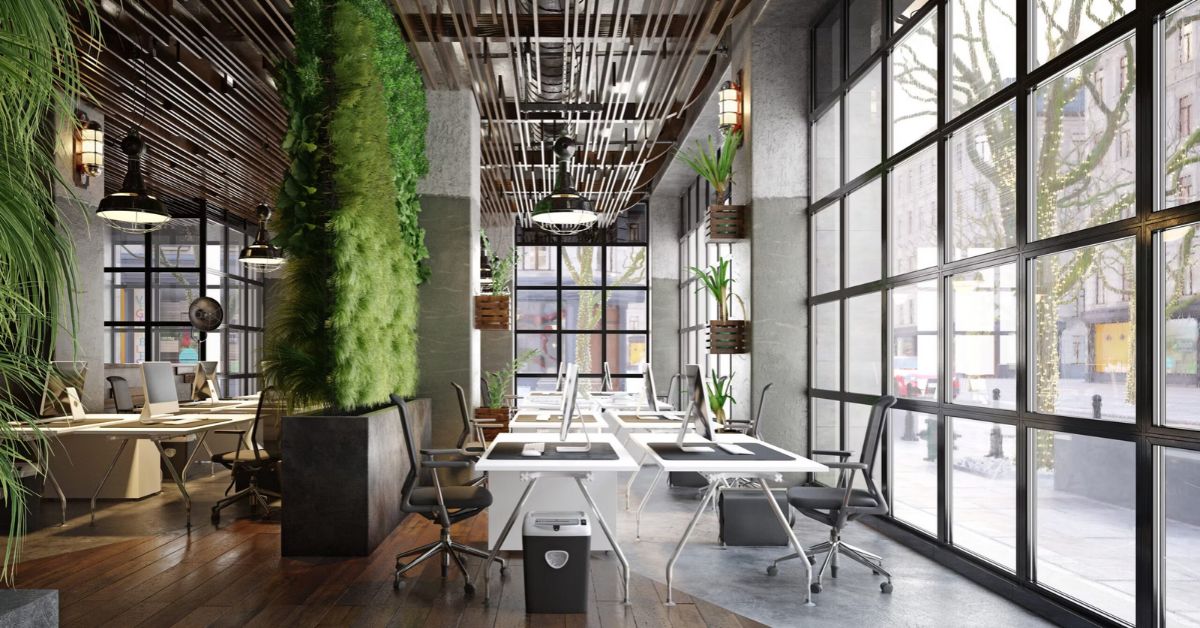
Natural light is a valuable feature in modern office design. Large windows, glass partitions, open layouts, and well-positioned workstations can allow daylight to reach deeper into the workplace.

Using natural light effectively can make an office feel brighter, more spacious, and welcoming. It can also reduce dependence on artificial lighting during daylight hours. However, designers need to manage direct sunlight carefully to avoid glare and excessive heat.

Blinds, curtains, solar-control glass, and appropriate workstation positioning can help control daylight while maintaining its benefits.

Enhances Office Aesthetics

Lighting can transform the appearance of an office interior. A simple workspace can look more sophisticated when lighting is integrated into the overall design concept.

Pendant lights, recessed fixtures, linear lights, wall lighting, and architectural illumination can be used to highlight important areas. For example, decorative lighting can create a welcoming reception area, while concealed lighting can emphasize wall textures or design features.

Lighting should complement the office furniture, flooring, ceiling, wall finishes, and brand identity. When these elements work together, the workplace gains a consistent and professional appearance.

Defines Different Work Zones

Modern offices often include multiple areas such as workstations, meeting rooms, collaboration spaces, breakout zones, reception areas, and private cabins. Each space can have its own lighting requirements.

Brighter and uniform lighting may work well in workstation areas, while collaboration zones can use flexible lighting to create a relaxed environment. Meeting rooms may benefit from dimmable fixtures that can be adjusted for presentations, discussions, and video conferences.

This approach allows lighting to help define the purpose of each zone without requiring physical barriers.

Improves Meeting and Presentation Spaces

Meeting rooms require lighting that supports both people and technology. Excessive brightness or poorly positioned fixtures can cause reflections on screens and make video calls uncomfortable.

Modern meeting spaces often use layered and adjustable lighting. Ceiling lights provide general illumination, while additional fixtures can improve visibility around conference tables. Dimmable systems allow employees to adjust brightness during presentations or video conferences.

Proper lighting also helps participants remain visually engaged and creates a more professional environment for client meetings.

Supports Energy Efficiency

Energy efficiency has become an important consideration in office interior design. LED lighting has become popular because it provides efficient illumination while offering a wide range of colour temperatures and design options.

Lighting controls can further improve efficiency. Motion sensors, daylight sensors, timers, and smart controls can reduce unnecessary energy consumption by adjusting lighting according to occupancy and available daylight.

An efficient lighting strategy can support sustainability goals while helping businesses manage long-term operating costs.

Strengthens Workplace Identity

Office interiors often reflect a company’s culture and professional identity. Lighting can contribute significantly to this impression. A creative company may prefer distinctive fixtures and flexible lighting arrangements, while a corporate office may choose clean, minimal, and sophisticated lighting solutions.

Brand colours, architectural features, signage, and reception areas can also be highlighted through carefully positioned lighting. This creates a workplace that feels connected to the company’s identity rather than looking like a generic office.

Creates a More Flexible Workplace

Modern workplaces need to accommodate changing work styles. Employees may move between individual workstations, meeting areas, collaboration zones, and informal spaces throughout the day.

Flexible lighting systems can support these changing requirements. Adjustable fixtures, dimming controls, and smart lighting technology allow employees and facility teams to modify illumination according to different activities.

This flexibility becomes especially valuable in offices designed around hybrid work and multifunctional spaces.

Conclusion

Lighting design plays a major role in shaping modern office interiors. It influences comfort, productivity, aesthetics, energy efficiency, and the overall workplace experience. A successful lighting plan does not simply focus on brightness. It considers how employees use each space and combines natural light, ambient illumination, task lighting, and accent lighting accordingly. In office renovation commercial projects, upgrading the lighting system can also help create a more efficient and comfortable workplace.

When lighting is integrated with furniture, architecture, technology, and workplace planning, it creates an office that is functional, comfortable, and visually appealing. For businesses developing modern workspaces, investing in thoughtful lighting design can make the entire office environment more effective and welcoming.

Mr.T.Suresh Babu

Chief Financial Officer
Mr. Suresh Babu serves as the Chief Financial Officer (CFO) of the organization, bringing a wealth of expertise in financial management, strategic planning, and corporate governance. With extensive experience in steering financial operations, he plays a pivotal role in shaping the company’s financial strategy and ensuring sustainable business growth.
In his role, Mr. Babu oversees all aspects of the company’s financial functions, including budgeting, forecasting, financial reporting, and regulatory compliance. His meticulous approach ensures that the organization maintains the highest standards of financial discipline, transparency, and accountability.
A results-driven leader, he leverages his strong analytical skills to provide actionable insights, optimize operational efficiency, and support informed decision-making across all levels of the business. He is also deeply committed to effective cost management and risk mitigation, enabling the company to achieve its strategic objectives while maintaining financial stability.
Recognized for his leadership, strategic vision, and integrity, Mr. Suresh Babu is a driving force behind the organization’s financial health and long-term success. His dedication to excellence and commitment to upholding corporate governance principles make him an invaluable asset to the company and its stakeholders.

Mr.Niranjan Rao

Whole-Time Director
Mr. Niranjan Vykarna Rao, aged 59 years, is the Whole-Time Director of the Company and has been associated with the Board since September 2010. He has completed his formal education up to higher secondary schooling and brings over 15 years of hands-on experience in the facility management industry.
He is responsible for overseeing the Company’s day-to-day operations across key functions and plays a pivotal role in establishing robust systems, processes, and monitoring mechanisms to ensure efficient, compliant, and profitable business operations. His operational expertise has been instrumental in strengthening service delivery, optimizing resources, and maintaining high standards of performance across projects.
With deep domain knowledge and a practical, execution-driven leadership approach, Mr. Rao contributes significantly to operational stability, process discipline, and sustained growth of the organization.
Other Directorships: Rithwik Indus Power Private Limited.

Mr. S.Jayapandi

Company Secretary & Compliance Officer
S Jayapandi is an experienced and detail-oriented Company Secretary with a strong background in corporate governance, regulatory compliance, and board administration. With a thorough understanding of statutory requirements and corporate best practices, he ensures that the company operates in full compliance with applicable laws and regulations.
In this role, S Jayapandi supports the Board of Directors and senior management by coordinating board and committee meetings, maintaining corporate records, preparing resolutions, and ensuring timely filing of statutory documents. He also acts as a key point of contact between the company, regulators, shareholders, and other stakeholders.
Known for professionalism, confidentiality, and strong organizational skills, S Jayapandi plays a critical role in promoting transparent governance and effective decision-making within the organization.

Mr.Rithwik Rajshekar Raman

Managing Director
Mr. Rithwik is the Managing Director of the company, bringing a strong blend of entrepreneurial leadership, operational excellence, and strategic growth expertise. With a solid foundation in business management and a Master’s degree in Entrepreneurship from the University of Melbourne, he has consistently demonstrated the ability to build, scale, and diversify businesses across multiple sectors.
He has led the successful execution and expansion of various business verticals, including facility management services, commercial turnkey projects, renewable energy solutions, and infrastructure development. Under his leadership, the organization has achieved sustainable growth through strategic planning, process optimization, and a strong focus on quality, safety, and client satisfaction.
Mr. Rithwik possesses extensive experience in end-to-end project management, business development, stakeholder engagement, and operational governance. He has played a pivotal role in driving new market entry, forging strategic partnerships, and implementing innovative solutions to enhance efficiency and profitability.
With a forward-looking mindset and deep understanding of evolving industry trends, sustainability practices, and emerging technologies, Mr. Rithwik continues to steer the organization toward long-term value creation. His leadership style is marked by agility, accountability, and a strong commitment to building high-performing teams and resilient business models.
Other Directorships: Rithwik Indus Power Private Limited.

Mr. G. Jayaraman

Independent Director
Mr. G. Jayaraman is an accomplished Corporate Affairs and Regulatory Compliance professional with over 18 years of experience across government liaison, statutory compliance, stakeholder management, and large-scale project execution.
He currently serves as Associate Director – Corporate Affairs at OLA Electric Technologies Pvt. Ltd., where he plays a key role in managing government relations, regulatory approvals, risk mitigation, and stakeholder engagement for large manufacturing and infrastructure projects. He has been instrumental in driving greenfield and brownfield projects from inception to commercial production, ensuring 100% statutory compliance.
Mr. Jayaraman has strong expertise in MCA and RBI regulations, government affairs, sustainability reporting, crisis management, and strategic communication. He has successfully led multiple high-impact projects, including single-window clearances, land acquisition, MoU negotiations, and project commissioning within aggressive timelines.
Academically, he holds a Master’s degree in Corporate Secretaryship and is IRCA Certified Lead Auditor for ISO 9001:2015 (BSI). He is currently pursuing LLB and the Professional Programme of the Institute of Company Secretaries of India (ICSI).
With a deep understanding of India’s political and economic environment, Mr. Jayaraman brings strong leadership, strategic insight, and relationship-building capabilities to the organization.
Employed at Samsung India Electronics Private Limited as Deputy GM(Public Affairs), others Directorships : RR Industries Limited Independent director.

Mrs.Anitha Radhakrishnan

Director
Mrs. R. Anitha is a Post Graduate in Commerce from Madras University and holds a Master’s Diploma in Financial Management from Pondicherry University. She is the Promoter Director of Eshwar Corporate Solutions Private Limited, providing consultancy services in direct and indirect taxation, financial advisory, and secretarial services.
She also serves as a Director at Economist Communication Limited, an unlisted company that publishes the economic journal Industrial Economist.
With over a decade of experience in accounts, finance, and taxation, Mrs. Anitha brings strong financial expertise, regulatory insight, and strategic advisory capabilities to the organization.
Other Directorships: Eshwar Corporate Solutions, Independent Director in RR Industries Limited.

Mrs.Shama Prasanna.T

Director
Mrs. Shama Prasanna T. is a seasoned professional with over three decades of experience across business development, finance, travel, education, and social initiatives. She currently serves as Business Development Manager at FRR Forex and is an Independent Director at Rithwik Facility Management Services Ltd.
With a strong academic background in Ancient Indian Culture and History, she combines strategic thinking with cultural sensitivity and organizational leadership. She has held senior roles in forex, stock broking, travel & tourism, and has been actively involved in regulatory, heritage, and arts organizations.
Shama has also contributed extensively to community leadership, having served as District Chairman of Inner Wheel District 323, overseeing 46 clubs and 1,300+ members. She is actively associated with Rotary, educational institutions, and cultural foundations, including work in social media management for renowned classical dancer Padma Shri Malavika Sarukkai.
Fluent in multiple Indian and international languages, she brings global exposure, strong people skills, and a passion for culture, education, and social impact.
Employed at FRR Forex Private Limited.