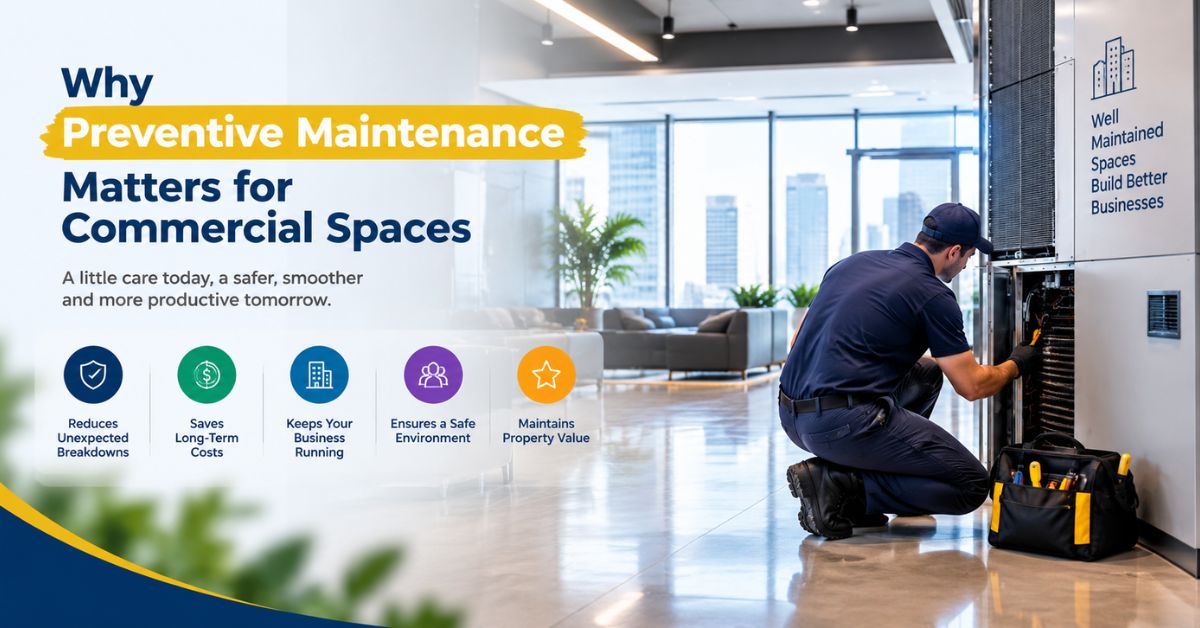
Why Preventive Maintenance Matters for Commercial Spaces

Why Preventive Maintenance Matters for Commercial Spaces

Office renovation can provide more than a visual transformation. When planned around employee needs and business objectives, it can improve comfort, space utilisation, collaboration, concentration, technology access, and workplace well-being. Well-planned office work spaces can also help employees move efficiently between individual tasks, meetings, and team activities.

A productive office should make everyday work easier rather than create unnecessary obstacles. By investing in thoughtful space planning, ergonomic solutions, efficient lighting, flexible work areas, and modern workplace facilities, businesses can create an environment where employees can perform at their best.

The right renovation approach can turn an outdated office into a practical and engaging workplace that supports both employee productivity and long-term business growth.

Reduces Unexpected Repair Costs

One of the biggest advantages of preventive maintenance is better cost control. Small issues can become expensive problems when they are left untreated. A minor electrical fault, water leak, damaged fixture, or poorly functioning air-conditioning unit may eventually require extensive repairs if it is ignored.

Routine inspections allow maintenance teams to identify these issues at an early stage. Fixing a small problem is usually more manageable than replacing an entire system after a serious breakdown. Regular servicing can therefore help businesses avoid sudden expenses and plan their maintenance budgets more effectively.

Improves Workplace Safety

Safety should always be a priority in commercial environments. Faulty electrical connections, damaged flooring, blocked emergency exits, leaking pipes, poor lighting, and malfunctioning equipment can create risks for employees, customers, and visitors.

Preventive maintenance helps identify potential hazards before they lead to accidents. Regular checks of electrical systems, fire safety equipment, ventilation, plumbing, lighting, and other building components can create a safer working environment. A well-maintained property also demonstrates that the business takes the wellbeing of its people seriously.

Keeps Business Operations Running

Unexpected equipment failures can interrupt normal business activities. A heating or cooling problem can make an office uncomfortable, while plumbing issues can affect restaurants, retail spaces, and other commercial facilities. Electrical failures may even bring important operations to a complete stop.

A planned maintenance program reduces the likelihood of sudden breakdowns. Maintenance can also be scheduled during quieter periods to minimize disruption. This allows businesses to continue their daily activities with fewer interruptions and greater confidence.

Extends the Life of Building Systems

Commercial equipment and building systems represent significant investments. Air-conditioning units, electrical systems, plumbing infrastructure, lighting, flooring, doors, and other components can last longer when they receive proper care.

Regular cleaning, inspection, adjustment, and servicing can prevent excessive wear and damage. For example, servicing an HVAC system can help maintain efficient airflow and reduce unnecessary strain on the equipment. Similarly, checking plumbing connections can help prevent leaks that may damage walls, flooring, and other parts of the property.

Extending the useful life of building assets can reduce the frequency of major replacements and help businesses get better value from their investments.

Supports Energy Efficiency

Poorly maintained systems can consume more energy than necessary. Dirty filters, blocked vents, damaged seals, inefficient lighting, and malfunctioning equipment may force building systems to work harder to achieve the same results.

Preventive maintenance helps keep equipment operating closer to its intended performance level. Regular cleaning and servicing can improve efficiency while reducing unnecessary energy consumption. Over time, this can contribute to lower operating expenses and support a more sustainable commercial property.

Maintains Professional Appearance

The condition of a commercial space can influence how employees, customers, clients, and visitors view a business. Damaged surfaces, broken fixtures, poor lighting, leaking ceilings, or neglected common areas can create an unprofessional impression.

Routine maintenance helps keep the property clean, functional, and visually appealing. Regular inspections can identify areas that need attention before they become noticeable problems. A well-maintained commercial environment can support a more positive experience for everyone using the space.

Helps Maintain Compliance

Commercial properties may need to meet various safety, building, electrical, fire protection, and workplace requirements. Neglecting maintenance can increase the risk of non-compliance and create operational or legal concerns.

A structured maintenance program encourages regular checks and documentation. Keeping records of inspections, servicing, repairs, and equipment condition can also help facility managers track maintenance activities and demonstrate that appropriate measures are being taken.

Improves Employee Comfort and Productivity

A comfortable workplace can support employee satisfaction and productivity. Temperature, ventilation, lighting, cleanliness, and general building conditions all contribute to the working environment.

Preventive maintenance helps keep essential systems operating properly. Regular HVAC servicing, lighting inspections, plumbing checks, and facility upkeep can reduce common problems that affect workplace comfort. When employees can work in a clean, safe, and comfortable environment, they can focus more effectively on their responsibilities.

Makes Maintenance More Predictable

Reactive maintenance often means dealing with problems when they happen. This can create stress, unexpected expenses, and scheduling difficulties. Preventive maintenance creates a more organized approach. For businesses managing a Commercial space for rent, regular maintenance can also help keep the property safe, functional, and appealing to occupants.

Businesses can establish maintenance calendars based on equipment requirements, building conditions, usage levels, and manufacturer recommendations. Planned inspections make it easier to assign responsibilities, arrange technicians, order replacement parts, and schedule work without affecting important business activities.

Conclusion

Preventive maintenance is an important part of managing a reliable commercial space. It can reduce unexpected breakdowns, control repair costs, improve safety, support energy efficiency, extend equipment life, and maintain a professional environment. More importantly, it changes maintenance from a reactive task into a planned business activity.

For commercial property owners and facility managers, regular maintenance is not simply about fixing problems. It is about protecting valuable assets, supporting daily operations, and creating a dependable environment for employees, customers, and visitors. A consistent preventive maintenance plan can help commercial spaces remain efficient, safe, comfortable, and ready for business throughout the year.

Mr.T.Suresh Babu

Chief Financial Officer
Mr. Suresh Babu serves as the Chief Financial Officer (CFO) of the organization, bringing a wealth of expertise in financial management, strategic planning, and corporate governance. With extensive experience in steering financial operations, he plays a pivotal role in shaping the company’s financial strategy and ensuring sustainable business growth.
In his role, Mr. Babu oversees all aspects of the company’s financial functions, including budgeting, forecasting, financial reporting, and regulatory compliance. His meticulous approach ensures that the organization maintains the highest standards of financial discipline, transparency, and accountability.
A results-driven leader, he leverages his strong analytical skills to provide actionable insights, optimize operational efficiency, and support informed decision-making across all levels of the business. He is also deeply committed to effective cost management and risk mitigation, enabling the company to achieve its strategic objectives while maintaining financial stability.
Recognized for his leadership, strategic vision, and integrity, Mr. Suresh Babu is a driving force behind the organization’s financial health and long-term success. His dedication to excellence and commitment to upholding corporate governance principles make him an invaluable asset to the company and its stakeholders.

Mr.Niranjan Rao

Whole-Time Director
Mr. Niranjan Vykarna Rao, aged 59 years, is the Whole-Time Director of the Company and has been associated with the Board since September 2010. He has completed his formal education up to higher secondary schooling and brings over 15 years of hands-on experience in the facility management industry.
He is responsible for overseeing the Company’s day-to-day operations across key functions and plays a pivotal role in establishing robust systems, processes, and monitoring mechanisms to ensure efficient, compliant, and profitable business operations. His operational expertise has been instrumental in strengthening service delivery, optimizing resources, and maintaining high standards of performance across projects.
With deep domain knowledge and a practical, execution-driven leadership approach, Mr. Rao contributes significantly to operational stability, process discipline, and sustained growth of the organization.
Other Directorships: Rithwik Indus Power Private Limited.

Mr. S.Jayapandi

Company Secretary & Compliance Officer
S Jayapandi is an experienced and detail-oriented Company Secretary with a strong background in corporate governance, regulatory compliance, and board administration. With a thorough understanding of statutory requirements and corporate best practices, he ensures that the company operates in full compliance with applicable laws and regulations.
In this role, S Jayapandi supports the Board of Directors and senior management by coordinating board and committee meetings, maintaining corporate records, preparing resolutions, and ensuring timely filing of statutory documents. He also acts as a key point of contact between the company, regulators, shareholders, and other stakeholders.
Known for professionalism, confidentiality, and strong organizational skills, S Jayapandi plays a critical role in promoting transparent governance and effective decision-making within the organization.

Mr.Rithwik Rajshekar Raman

Managing Director
Mr. Rithwik is the Managing Director of the company, bringing a strong blend of entrepreneurial leadership, operational excellence, and strategic growth expertise. With a solid foundation in business management and a Master’s degree in Entrepreneurship from the University of Melbourne, he has consistently demonstrated the ability to build, scale, and diversify businesses across multiple sectors.
He has led the successful execution and expansion of various business verticals, including facility management services, commercial turnkey projects, renewable energy solutions, and infrastructure development. Under his leadership, the organization has achieved sustainable growth through strategic planning, process optimization, and a strong focus on quality, safety, and client satisfaction.
Mr. Rithwik possesses extensive experience in end-to-end project management, business development, stakeholder engagement, and operational governance. He has played a pivotal role in driving new market entry, forging strategic partnerships, and implementing innovative solutions to enhance efficiency and profitability.
With a forward-looking mindset and deep understanding of evolving industry trends, sustainability practices, and emerging technologies, Mr. Rithwik continues to steer the organization toward long-term value creation. His leadership style is marked by agility, accountability, and a strong commitment to building high-performing teams and resilient business models.
Other Directorships: Rithwik Indus Power Private Limited.

Mr. G. Jayaraman

Independent Director
Mr. G. Jayaraman is an accomplished Corporate Affairs and Regulatory Compliance professional with over 18 years of experience across government liaison, statutory compliance, stakeholder management, and large-scale project execution.
He currently serves as Associate Director – Corporate Affairs at OLA Electric Technologies Pvt. Ltd., where he plays a key role in managing government relations, regulatory approvals, risk mitigation, and stakeholder engagement for large manufacturing and infrastructure projects. He has been instrumental in driving greenfield and brownfield projects from inception to commercial production, ensuring 100% statutory compliance.
Mr. Jayaraman has strong expertise in MCA and RBI regulations, government affairs, sustainability reporting, crisis management, and strategic communication. He has successfully led multiple high-impact projects, including single-window clearances, land acquisition, MoU negotiations, and project commissioning within aggressive timelines.
Academically, he holds a Master’s degree in Corporate Secretaryship and is IRCA Certified Lead Auditor for ISO 9001:2015 (BSI). He is currently pursuing LLB and the Professional Programme of the Institute of Company Secretaries of India (ICSI).
With a deep understanding of India’s political and economic environment, Mr. Jayaraman brings strong leadership, strategic insight, and relationship-building capabilities to the organization.
Employed at Samsung India Electronics Private Limited as Deputy GM(Public Affairs), others Directorships : RR Industries Limited Independent director.

Mrs.Anitha Radhakrishnan

Director
Mrs. R. Anitha is a Post Graduate in Commerce from Madras University and holds a Master’s Diploma in Financial Management from Pondicherry University. She is the Promoter Director of Eshwar Corporate Solutions Private Limited, providing consultancy services in direct and indirect taxation, financial advisory, and secretarial services.
She also serves as a Director at Economist Communication Limited, an unlisted company that publishes the economic journal Industrial Economist.
With over a decade of experience in accounts, finance, and taxation, Mrs. Anitha brings strong financial expertise, regulatory insight, and strategic advisory capabilities to the organization.
Other Directorships: Eshwar Corporate Solutions, Independent Director in RR Industries Limited.

Mrs.Shama Prasanna.T

Director
Mrs. Shama Prasanna T. is a seasoned professional with over three decades of experience across business development, finance, travel, education, and social initiatives. She currently serves as Business Development Manager at FRR Forex and is an Independent Director at Rithwik Facility Management Services Ltd.
With a strong academic background in Ancient Indian Culture and History, she combines strategic thinking with cultural sensitivity and organizational leadership. She has held senior roles in forex, stock broking, travel & tourism, and has been actively involved in regulatory, heritage, and arts organizations.
Shama has also contributed extensively to community leadership, having served as District Chairman of Inner Wheel District 323, overseeing 46 clubs and 1,300+ members. She is actively associated with Rotary, educational institutions, and cultural foundations, including work in social media management for renowned classical dancer Padma Shri Malavika Sarukkai.
Fluent in multiple Indian and international languages, she brings global exposure, strong people skills, and a passion for culture, education, and social impact.
Employed at FRR Forex Private Limited.