
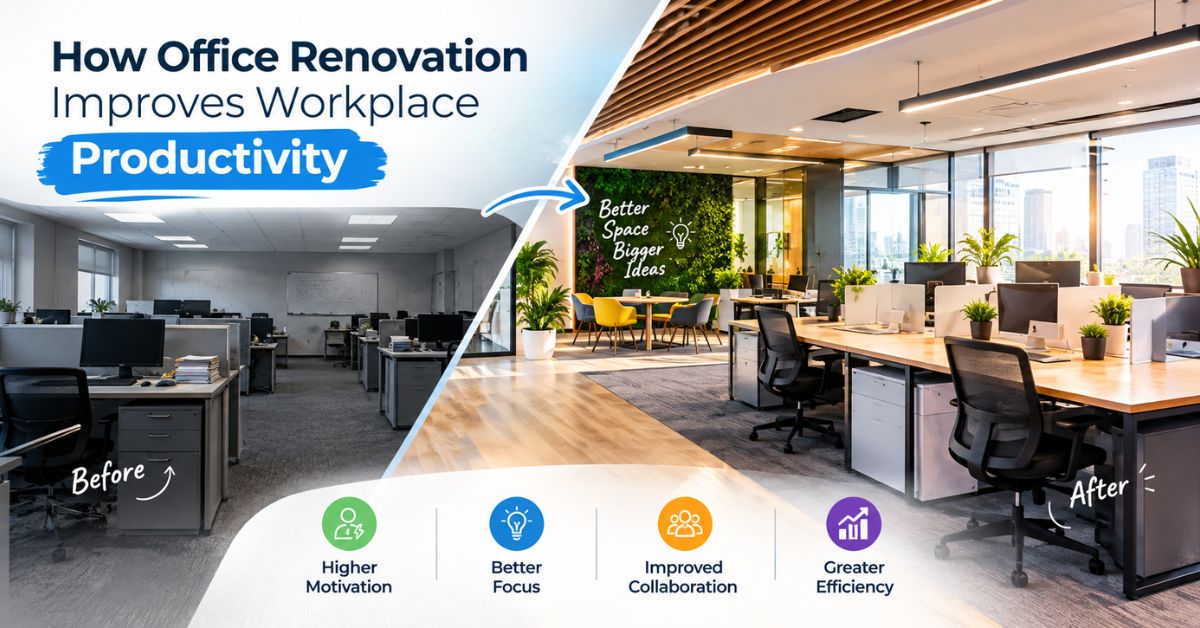
A well-designed office can influence how employees work, communicate, concentrate, and feel throughout the day. As businesses grow and workplace needs change, an outdated office may no longer provide the comfort and functionality employees require. Office renovation commercial projects offer an opportunity to create a more practical, comfortable, and productive working environment.
A successful renovation is not only about improving the appearance of an office. It can involve better space planning, improved lighting, ergonomic furniture, efficient storage, modern technology, and dedicated areas for collaboration and focused work. When these elements are planned properly, the workplace can support employee performance while creating a stronger professional environment.
Creates a More Comfortable Working Environment
Employee comfort has a direct influence on concentration and productivity. Poor seating, insufficient lighting, limited ventilation, and overcrowded work areas can make employees feel uncomfortable during working hours.
Office renovation allows businesses to address these problems through better workplace planning. Ergonomic chairs, adjustable desks, suitable lighting, improved ventilation, and well-organised workstations can create a healthier and more comfortable environment.
When employees have a workspace that supports their physical needs, they can stay focused for longer periods and experience less workplace discomfort.
Improves Space Utilisation
An inefficient office layout can make everyday activities more difficult. Employees may spend unnecessary time moving between departments, searching for documents, or finding suitable spaces for meetings and discussions.
Renovation provides an opportunity to analyse how the existing space is being used and make better use of available areas. Workstations can be positioned according to team requirements, meeting rooms can be placed strategically, and storage areas can be organised more efficiently.
A practical layout reduces unnecessary movement and helps employees access the people, tools, and resources they need more easily.
Supports Better Collaboration
Modern workplaces require employees to communicate and collaborate regularly. However, an office without suitable meeting and collaboration areas may make teamwork difficult.
A renovated office can include dedicated discussion rooms, informal meeting spaces, brainstorming areas, and flexible work zones. These spaces give employees suitable environments for different types of activities.
For example, a private meeting room can support confidential discussions, while an open collaboration area can encourage brainstorming and team interaction. Providing different workspace options allows employees to choose an environment that matches their task.
Reduces Workplace Distractions
Noise and visual distractions can affect concentration, especially for employees who handle detailed or creative tasks. Open office environments can sometimes become noisy when there are frequent conversations, meetings, or movement around workstations.
Office renovation can address these concerns through thoughtful zoning and acoustic planning. Quiet work areas, enclosed meeting rooms, acoustic panels, and appropriate workstation positioning can help control workplace noise.
Creating a balance between collaborative and focused spaces allows employees to work without unnecessary interruptions while still maintaining opportunities for communication.
Improves Lighting and Natural Light
Lighting plays an important role in workplace comfort and concentration. Poor lighting can create eye strain and make employees feel tired, while excessive glare can affect computer-based work.
During an office renovation, businesses can improve lighting by introducing efficient LED fixtures, task lighting, and better placement of workstations. Where possible, maximising natural light can also make the workplace feel brighter and more welcoming.
A well-lit office can create a positive atmosphere and help employees remain comfortable throughout their working day.
Encourages Employee Well-Being
A productive workplace should also support employee well-being. Employees spend a significant portion of their day at work, so the physical environment can influence their overall workplace experience.
Renovated offices can include comfortable break areas, wellness spaces, improved ventilation, greenery, and better circulation. These features can make the workplace more pleasant and provide employees with opportunities to take short breaks and recharge.
When employees feel comfortable and valued within their workplace, they are more likely to maintain positive engagement with their daily responsibilities.
Supports Modern Technology
Technology is now an essential part of most workplaces. Outdated electrical systems, insufficient power points, poor cable management, or limited connectivity can interrupt daily operations.
Office renovation provides an opportunity to integrate technology into the workplace design. This may include improved power access, structured cabling, video conferencing facilities, charging points, smart lighting, and technology-ready meeting rooms.
A technology-friendly office reduces operational interruptions and allows employees to use the digital tools they need more efficiently.
Strengthens Employee Morale
The condition of an office can influence how employees perceive their organisation. A clean, modern, and thoughtfully designed workplace can demonstrate that a company values its employees and is committed to providing a suitable working environment.
A refreshed office can create a sense of energy and renewal. Employees may feel more motivated when their surroundings are organised, attractive, and designed around their practical needs.
This positive atmosphere can contribute to stronger workplace engagement and a more productive company culture.
Makes the Workplace More Flexible
Business requirements can change over time. Teams may expand, departments may move, and new working styles may become necessary. A rigid office layout may struggle to accommodate these changes.
Modern office renovation can focus on flexible design. Movable furniture, multipurpose rooms, modular workstations, and adaptable meeting areas can allow businesses to modify spaces as their requirements evolve.
This flexibility helps organisations make better long-term use of their office space without requiring major changes every time their workplace needs change.
Conclusion
Office renovation can provide more than a visual transformation. When planned around employee needs and business objectives, it can improve comfort, space utilisation, collaboration, concentration, technology access, and workplace well-being. Well-planned office work spaces can also help employees move efficiently between individual tasks, meetings, and team activities.
A productive office should make everyday work easier rather than create unnecessary obstacles. By investing in thoughtful space planning, ergonomic solutions, efficient lighting, flexible work areas, and modern workplace facilities, businesses can create an environment where employees can perform at their best.
The right renovation approach can turn an outdated office into a practical and engaging workplace that supports both employee productivity and long-term business growth.